An Impact Structure With Legs - NASA Science
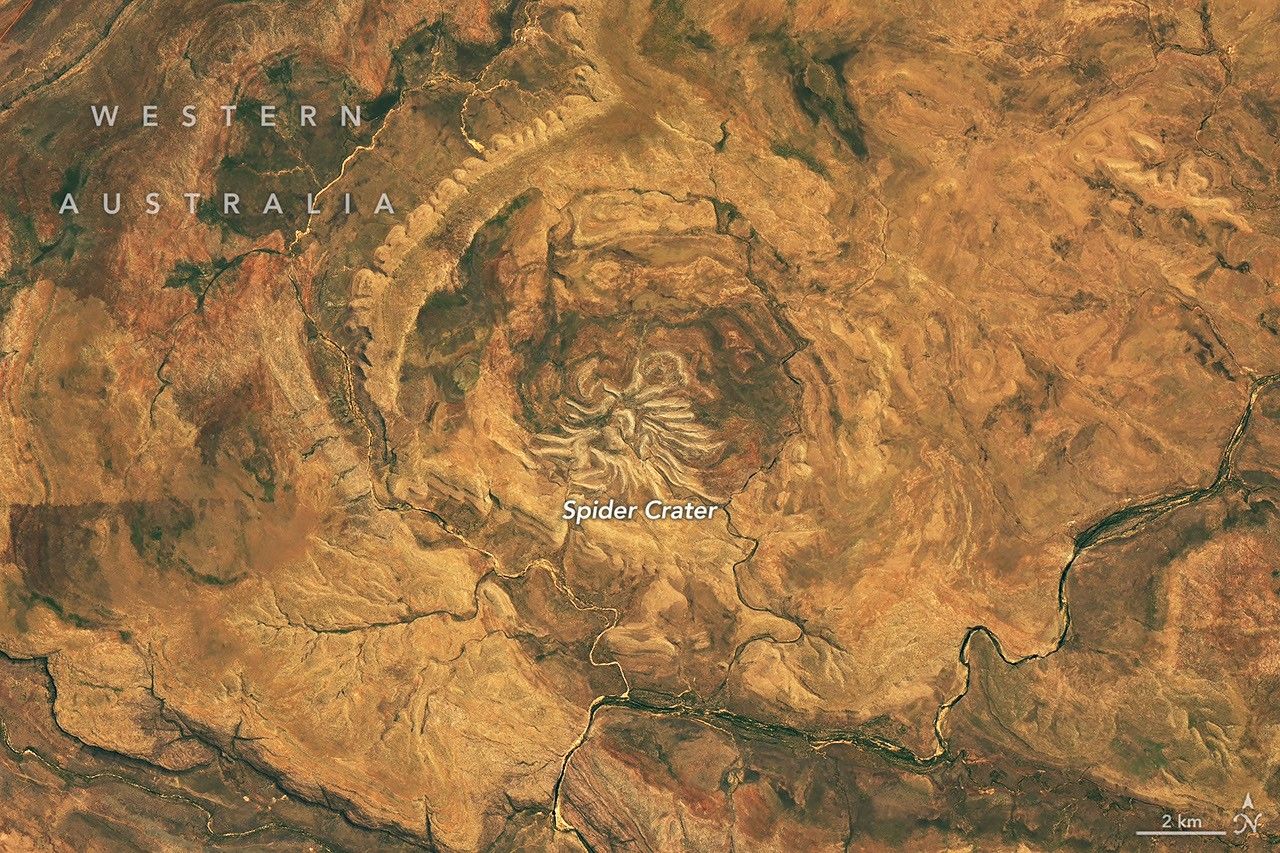
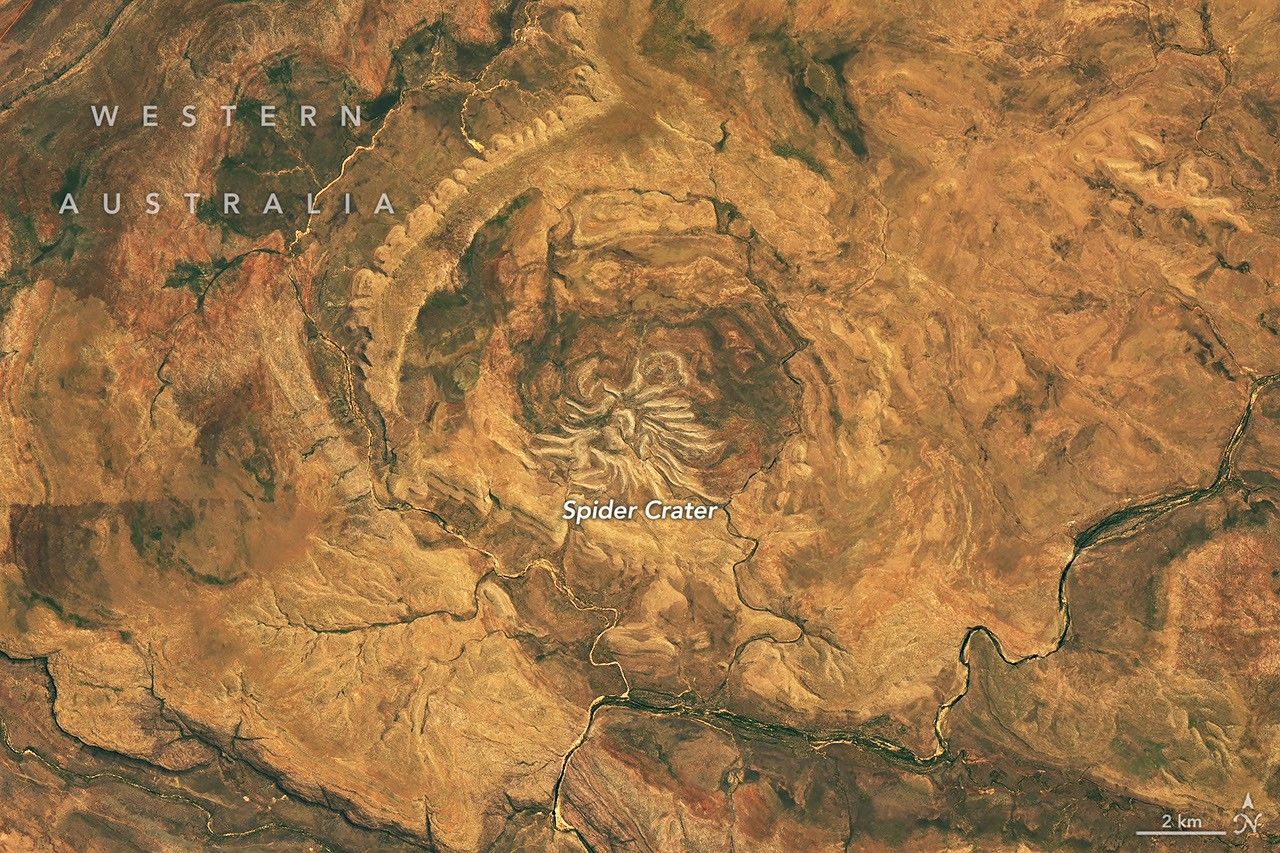
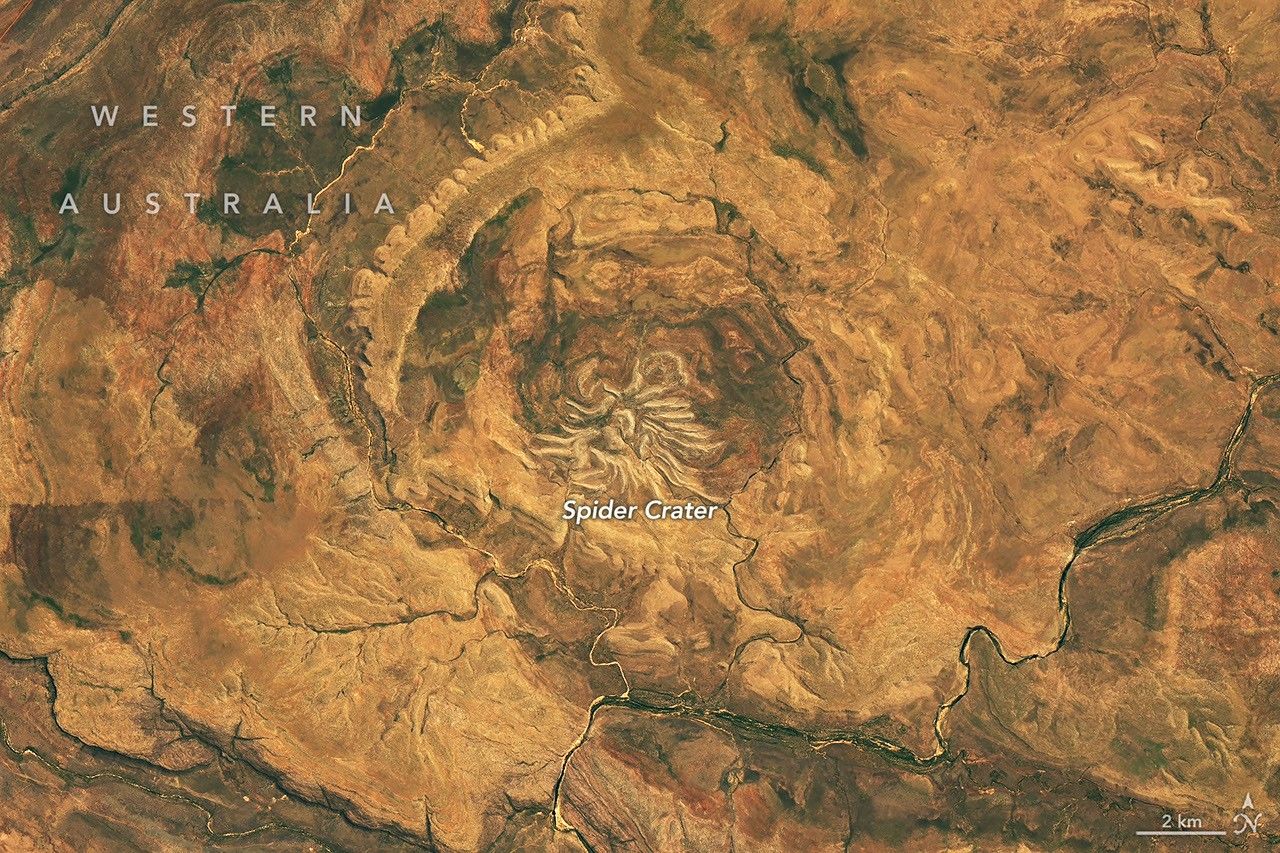
Summary: A satellite image of the Spider Crater in Western Australia, a unique impact structure featuring a central uplift that resembles a spider.
Captured by the Landsat 9 satellite on September 20, 2026, this image displays the Spider Crater in the Kimberley region of Western Australia. The structure, which measures approximately 13 by 11 kilometers, features a distinct central uplift that creates an arachnoid pattern. The light-colored 'legs' of the spider are erosion-resistant sandstone ridges. Geologists have confirmed the site as an impact crater by identifying shatter cones—fan-shaped fractures formed by intense shock waves—and shocked minerals within the central dome. The impact is estimated to have occurred between 900 million and 600 million years ago.
Document outline
1. Overview of Spider Crater in Western Australia 2. Satellite imaging details (Landsat 9, September 20, 2026) 3. Geological formation and the 'spider' pattern 4. Evidence of impact: shatter cones and shocked minerals 5. Estimated age of the impact (late Precambrian) 6. References and further reading